National Library Week
There are a lot of National This Days or That Weeks – periods of time set aside to celebrate a person or a group of people, an event, or an institution that has special meaning for us. This week, we’re celebrating one of my favorites, something we all too often take for granted – the library. A good library is the heart of a good community.
One of life’s real pleasures is curling up with a good book – a simple pleasure – or maybe not. It seems simple enough: select a book (preferably a nice thick one), find a comfortable chair, add a cozy quilt to tuck around yourself, snuggle in – and lose yourself in another world – actually two other worlds.
Your outer self luxuriates in the tactile sensation of the book in your hands as your eyes skim over a page covered by a series of funny little squiggles that, through the ages and the ingenuity of man, have been organized into something called writing. Each squiggle is a symbol that represents a sound. Grouped together, they form words. Combined with other words, they convey ideas, thoughts, emotions, knowledge and, in the best of times, wisdom.
Your inner self takes this amazing accomplishment for granted while it travels to another place – maybe to Czarist Russia with Anna Karenina, maybe to Jazz Age America with Jay Gatsby or maybe it stays close to home and delves into the psyche of a person of another race or another gender. This journey of the inner self can take you to another century – long past or far into the future. You can visit another planet or another universe. You can become part of a colony of rabbits or soar over the earth in the form of a seagull. Wherever you go, whatever guise you assume, you’re likely to experience something that will enhance your appreciation of the world to which you eventually return.
All of this happens because, somewhere in our history, human beings agreed that a line shaped in a certain way represents a certain sound. Simple, and yet amazing, especially when you consider that, as a species, we tend to disagree about almost everything.
Surely this is man’s most important invention. Compared with the written word, the wheel is trivial. Assembling the stories created by our words into treasures that we call books was another giant step forward. But not all books are stories. Some are filled with raw information that can be analyzed and assembled to help us understand our world and make it better. Some tell of past mistakes so that we can avoid repeating them. Books are my favorite part of the library, but they are far from being the only attraction. The number of ways in which ideas are being dispersed and experienced is growing with bewildering speed. Libraries and writers are faced with choices unimaginable a few years ago. Some of the choices may not be wise, but that’s okay. As mankind has always done, we’ll learn from our mistakes, try something else and (I type with crossed fingers) move ever closer to the best of times.
The idea to build libraries so that our stories and our knowledge can be preserved and shared is brilliant! Well worth celebrating!
THE ELUSIVE MUSE

“The essence of all art is to have pleasure in giving pleasure.”
That quote from the dancer, Mikhail Barshnikov, comes as close as anything I can think of to expressing what writing means to me. It captures the exhilaration of creating a world out of words and sharing that world with others. I completely identify with the statement, but there are times when the exhilaration is hard to find, when it’s almost suffocated by doubt and frustration.
Does that mean that my writing isn’t really art? That’s not for me to say (or even know). I can only do my best and hope. What I hope most is that it gives pleasure.
Do I have pleasure in writing? Depends on when you ask me. When the words flow easily–definitely. When I’m struggling to find the right words–not so much. How about when I’m stumped for a way to extricate my characters from the dilemma I’ve created for them? The answer to that is mixed. Part of my brain says, “Give it up. Turn off the computer. Make a cup of tea and have a brownie.” Another part says, “Keep going. Dig a little deeper. Your muse will show up.” I wish I could say the latter part always wins. Unfortunately, it doesn’t. More often than I like to admit, the call of chocolate is louder than my muse. When that happens, sometimes I go back refreshed and everything falls into place. Other times, problems seem to have multiplied in my absence. In the end, it doesn’t matter. The only thing that matters is that I do go back, because if I do, I know eventually I’ll work it out. And that knowledge is pleasure.
Right now I’ve almost finished my first draft of the next book in the Jennie Connors Riverview Manor mystery series. The tentative title is PACKED FOR TROUBLE. I say tentative because experience has taught me that at this point everything is subject to change.
I’m eager to get those last two chapters down so I can start the editing process. I know some writers don’t enjoy editing, but I do. In fact, it’s usually the most enjoyable part of writing for me. I say usually because, due to life getting in the way, this story has been a long time birthing and I’m more than usually concerned about whether or not the story will flow. Things have happened to me in the almost three and a half years since it began. My life has changed, so I suppose I’ve changed. I don’t know how much the change has affected my writing or my characters. Are they the same people I began with all those months ago? Should they be? I guess I’ll soon find out.
With that in mind, I’m even more eager than usual to read this draft. (I started to say complete story, but we all know a first draft is far from a completed story) At any rate, I’m looking forward to tinkering with little tics of behavior or personality changes my characters may have picked up since Jennie Connors was involved in her last adventure (LOVE ME DEADLY).
It’s a bit frightening, but very exciting. I’m confident if I follow my own advice (Keep going. Dig a little deeper), my muse will show up. Actually, that’s not quite true. My muse doesn’t just show up. I have to go looking for her. I’m prepared to do that. And I’ll keep looking until I find her. When I do–pure pleasure. At least for me and I sincerely hope for the reader.
Love Among the Stacks

One of the things I love about being a writer is having my books in libraries. Sometimes I visit them on my way through the stacks. How vain is that? I write mysteries and my last name begins with a C, so I’m on a shelf with Agatha Christie – something that never fails to send a tingle up my spine.
I can never resist reaching out to touch the spines of my books. If a book isn’t on the shelf–even better. Someone is reading my story! I feel an instant connection with that reader, though I’ll probably never know who it is. I send hopeful thoughts into the universe that they enjoy the book. Will my characters be as real to him (or her) as they are to me? What other books does this person read? I could go on (and on), but I’ll spare you.
I admit what I’ve just described is an ego trip, but my love affair with libraries is much more than that and began long before my books wre rubbing shoulders (spines?) with Ms. Christie. Some of my earliest and best memories are of wandering through what seemed to my young self like miles of books in a hushed, almost reverent, atmosphere. At least it was hushed when I was a girl. Libraries are livelier than they used to be–a good thing, I think.

The library in the small town where I live now has a section with puppets for the children to check out along with their books. No hushed reverence in that corner. Lots of giggles though. Sometimes the library experience leaves the building altogether. There’s an outdoor story program where a librarian travels to a nearby park with stories, songs, jokes and puppets. Participants are invited to bring a lunch and have a picnic. Another program I love is “Kids Reading to Dogs”. It’s not unusual to see a small person sprawled on the floor reading to a large and attentive Golden Retriever. Yes, the child is reading to a dog. The idea is that all kids really want to read; they all want to do well in school, but some of them need a little extra help–and a lot of practice. Reading to another person intimidates them, but they feel comfortable with a dog. There’s no need to measure up, no fear of judgment. To me, these programs are perfect examples of how libraries have changed as community needs and life styles have changed.
I was talking with one of our librarians recently about the changes she’s seen in her career. One thing is that the number of audio books being checked out is growing dramatically. Another is that half the space in the reference section is devoted to computers. There are almost as many requests for help navigating the Internet as there are for reference books. Does this signal the slow death of print books? I don’t think so. I believe the need to learn about different things and to become part of an imaginary world is a basic element of human nature and having information and stories available in different formats reinforces that need.
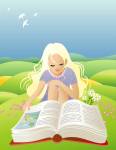
My friend said one thing that hasn’t changed is children’s story hour (her favorite part of her job). The kids still sit on the floor in front of the reader, wide-eyed, spellbound by the power of story–on their way to a lifelong love of books.
How about you? Do you have special memories of libraries? How do you feel about the changes that recent years have brought? Some people find them a little frightening. I’d love to hear how some of you feel about this.
Consider the Lilly

CONSIDER THE LILLY is the third book in the Jennie Connors/Riverview Manor mystery series, the one that introduced the Tea Ladies, six elderly women made up of more spice than sugar. I’d like to say I created this intrepid group, but actually they created themselves. They stood beside me as I wrote, telling me what they would or would not do.
So … what’s the story?
Jennie Connor’s friend, Lilly, is in big trouble. Two patrons are poisoned while dining at her restaurant. The police are busy with crowd control and don’t notice a shadowy figure climb down the arbor and slip away. Jennie watches and wonders if Lilly’s daughter, Jasmine, is up to her usual teenage mischief. Or is it something more sinister?
While the press focuses on one of the victims, Phillip Jeffries, a junior high principal who’s made a lot of enemies during his career, Jennie learns that the other victim, teacher Leonard Atkinson, has his own dirty little secret.
I hope someone has half as much fun reading CONSIDER THE LILLY as I had writing it. J
Here’s a link – https://amzn.to/3NYKzXD
All The Light We Cannot See – Redux

Finding Peace – a short story
Favorite Characters (again)
Here’s a post I wrote a few years ago. I still enjoy hanging out with these characters. To me, they’re much more than characters; they’re old (and very real) friends.

Bored and (much as I hate to admit it) in writing-avoidance mode, I started browsing some of my past musings. I came upon this, written a couple of years ago. It prompted me to wonder about other writers. Do you have favorite characters?
Asking a writer to name her favorite character is a little like asking a parent which of their children they love most. I, and I assume most writers, love all my characters – even the bad guys. Having said that, I admit some have a special place in my heart.
Put Out the Light was the book that introduced Jennie Connors to the world beyond my imagination. It  also introduced Nathaniel Pynchon, who started out small and went on to become a favorite. He’s become my go-to guy. When the plot starts to stall, I can count on Nate to do something outrageous and get things rolling again…
View original post 474 more words
INDEPENDENCE DAY
After basics like food and shelter, I can’t think of anything more precious or more essential to the human spirit than independence. And there’s probably nothing more taken for granted by those who possess it. That’s too bad, a grievous sin. It’s also probably true that we here in the United States are more guilty of this sin than most. However, once a year we at least try to redeem ourselves; we set aside a day to remember our heritage and to celebrate it. Today is that day: the Fourth of July, the anniversary of the signing of the Declaration of Independence, the document that condenses into six paragraphs the ideals on which our nation was founded.
Many of us memorized the Declaration of Independence sometime during our school years and promptly forgot most of it. But some phrases are so powerful and so evocative of what we as a nation hope to be, that they remain locked in the recesses of our brains–phrases like: “decent respect to the opinions of mankind,” “self-evident that all men are created equal” and, of course: “Life, Liberty and the Pursuit of Happiness.”
I don’t think there’s ever been a time when it’s been more necessary to remember those words. At the moment, our country is so divided that the crack in our Liberty Bell seems ominously appropriate. I believe that differences in opinion are good and even necessary to create a society that embodies the ideals of that brilliant Declaration. If only we could remember the phrase “decent respect to the opinions of mankind” and listen to all opinions, even those with which we disagree. Not just listen, but actually consider that there might be some truth in a viewpoint different from our own. If all men are created equal, shouldn’t all men (and women and children) be allowed to express their opinion? But perhaps not quite so vociferously. A little civility goes a long way.
The times may seem bleak, but history reminds me that this is not new. There has always been conflict among men, especially during periods of change. I understand that even the men we so lovingly call our Founding Fathers lost their tempers and shouted at each other from time to time. The story goes that George Washington wondered if he was witnessing a rising or a setting sun. So, maybe things are not as bad as they seem.
Go forth and celebrate your Life and Liberty. Pursue Happiness.

Coming Back
It’s been a while since I’ve posted here. I’ve been in a writing slump. That’s a hard thing for a writer to say, but I think it’s a rare writer who hasn’t had to make the admission at least once or twice in their life. It’s not a good feeling. To call it a break from writing is far from accurate. To me (and I suspect most writers), the need to put words on the page (or screen) is always present. Letting a day slip away without doing that results in the feeling that I’ve neglected something important. And coming back after a slump is not easy either. The longer the slump lasts, the harder it is. The first step is to take responsibility. I have to admit that failure to write was not imposed by an outside source. It’s something I allowed to happen.
Fortunately, I’m now emerging from this fallow period. How? The fellowship and encouragement of other writers has been a huge part of the process. Don’t ever underestimate the value of that. For the past six or eight months, I’ve been meeting once a month with two other writers. We simply sit in the same room and put words down. Somehow, our shared energy promotes creativity. There’s also an element of discipline involved. I don’t want to let my buddies down or to distract them by getting up and roaming around. When I write at home alone and can’t find the exact words I need, I take a break – tell myself I need a cookie or maybe do a load of laundry, It’s amazing the things I can find to do when I slip into writing avoidance mode.
I said earlier that all we do is write. That’s not quite true. Before we begin writing, we fill each other in on our progress since the last time we were together. We exchange ideas on how to be more professional in promoting our work. Since the three of us write in different genres, we are exposed to a variety of influences and possible outlets.
So far, I’ve talked about our process, but haven’t introduced you to my writing buddies. They are two exceptionally fine writers I know because we all volunteer at Pearl S. Buck International.
Linda Wisniewski is primarily a memoirist, who also writes inspirational and self-awareness articles which have appeared in numerous publications. She’s written a time-travel novel which grew out of her interest in memoir-writing. For more about Linda, I suggest you check her website: https://www.lindawis.com
Susan E. Wagner is first and foremost a poet. She also writes short stories and, like Linda, she writes articles, often with an inspirational or introspective theme. At the moment, she is working on a mystery novel (can’t wait to read that). Her website is https://www.SusanEWagner.com
An outgrowth of our association has been participation in a podcast interview by Claudine Wolk, who not only writes, but devotes a lot of time and energy to helping other writers. Here’s a link to the podcast https://www.buzzsprout.com/1434346/12860804
Linda, Sue and I will be sharing a table at the Flemington Summer Book Fest on May 28. https://tinyurl.com/yn68hxdr
I doubt I’d be involved in either of these activities if it were not for the influence of Linda and Sue. They helped me find my way back onto the writing path, for which I am immensely grateful. I am also grateful for this space and to anyone who reads these words. A writer without a reader is incomplete, so to anyone reading this – THANK YOU.
Small, Not-so-insignificant Things

I agree with Edward Abbey. Sometimes we get so distracted by big things that we forget the importance of small ones. I talk a lot about writing-related things and this quote certainly applies there, but that’s not the only place. It covers a much wider range – in fact, every facet of life.
One small example: My mother loved to cook. She expressed love with food. I remember as a young woman wishing that I could give her a shiny new kitchen, one with all the bells and whistles. Now I wish I’d thought to bring her flowers every now and then. Not huge, expensive arrangements. A handful of freshly picked blooms from a daughter who’s a klutz in the kitchen would probably have meant more to her than a whole array of the shiniest gadgets. There are so many other instances when I could have done some small, thoughtful thing for her – or for other people in my life – or for strangers. Moments I let slip by when I could have taken a couple of minutes to do something seemingly inconsequential – and made someone feel important.
I’m pretty sure I’m not alone in this. I think we all let small the opportunity slip by because we’re busy dreaming of the grand gesture.
Writers may be the more guilty than most. We so long for the satisfaction of a completed manuscript that we forget to savor the individual words as they go on the page, the small details that build the story, the description of a place that exists only in our imagination, the little tic of personality that defines a character we’re creating. These are the things that make a story come alive for a reader. I know the things I remember when I think of my favorite books are not huge, dramatic plot points. A tiny throw-away detail that connects me to a character, a setting, or a situation will stay with me long after I’ve forgotten the plot.
Is there any need to say more about this? I don’t think so. I’ll keep it short in honor of the tiny titmouse.
I hope you’re all enjoying the small delights of these crisp autumn days.

 BIRTH OF A NOVEL
